
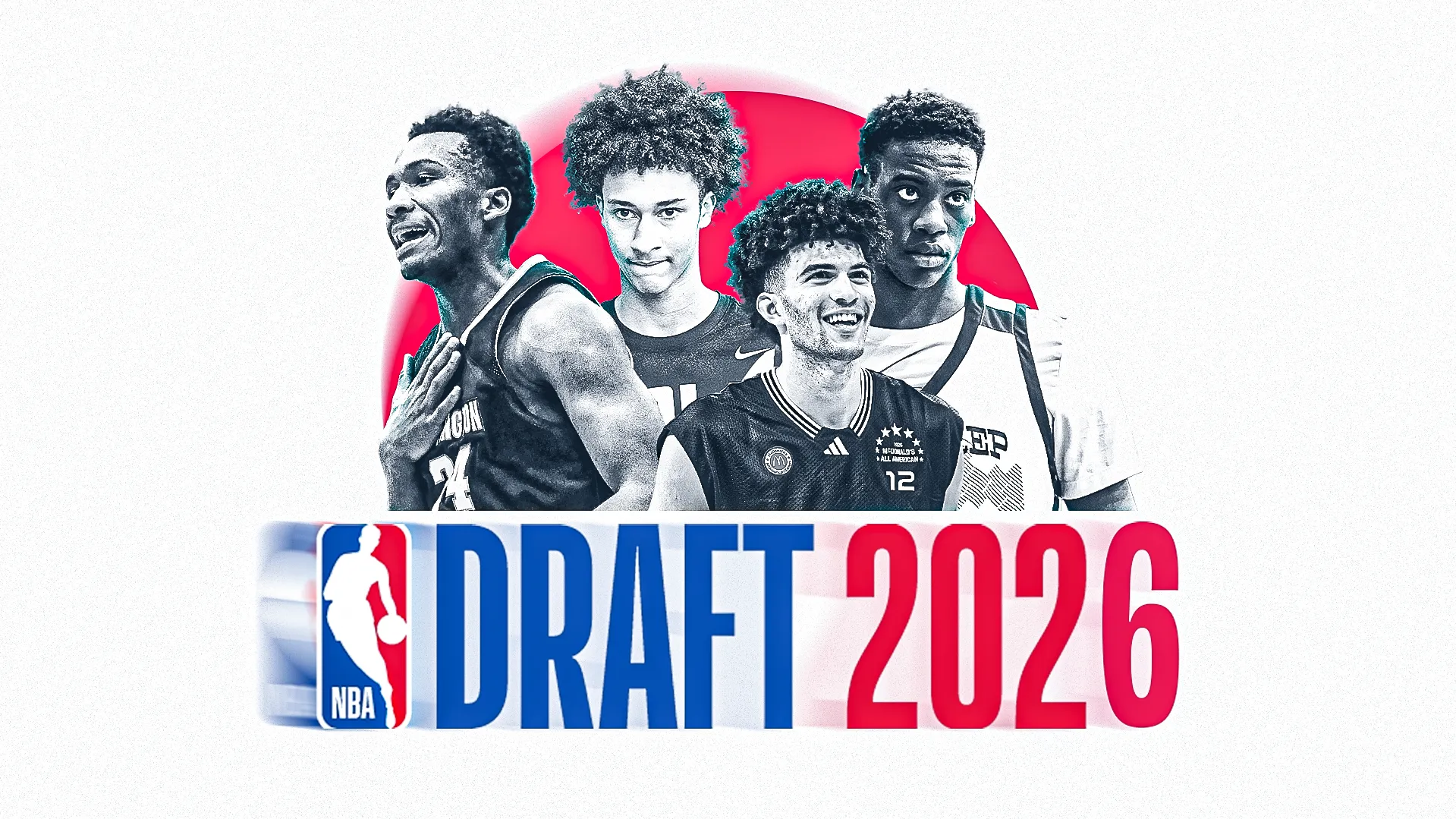
Photo: HoopsHype / 2026 NBA Draft Class / AJ Dybantsa, Darryn Peterson and more
Only 71 Players
Declared For The
NBA Draft.
NIL Gave Them
A Reason To Stay.
The 2026 NBA Draft has only 71 early entrants, the lowest number since 2003. Most people are calling it a problem. Here is why it is actually the most important shift in athlete leverage in a generation.
The 2025 high school basketball class was arguably the most talented group of prospects in over a decade. AJ Dybantsa. Darryn Peterson. Cameron Boozer. Dylan Harper. The names were generational. The anticipation was real. And yet when the early entry deadline for the 2026 NBA Draft closed on April 24, only 71 players had declared.[CBS Sports] That is the lowest number since 2003. Down from 106 last year. Down nearly 80 percent from the peak of 363 in 2021.[Yahoo Sports] Cameron Boozer, one of the most anticipated freshmen in years, is returning to Duke. Players who would have declared without hesitation five years ago are staying. And the reason is not complicated.
NIL gave them a reason to stay.
Before breaking down what this means, there is a framework worth establishing. When you look at how athletes have always built their legacies, you can trace two distinct types. The ones who walk into a situation and build the platform from the ground up. And the ones who find an existing platform and use it to become something bigger than it.
Both paths work. The common thread is intentionality. Whether you are building the platform or using one, your brand is still your responsibility. The team is the vehicle. What you put into the world as an individual athlete is what determines whether the vehicle drives you somewhere or just parks.
The reason this framework matters for the 2026 NBA Draft conversation is that NIL has introduced a third option that did not exist before. You can now stay in college, use the college platform intentionally, build your audience, build your brand, develop your game, and get paid to do it. The vehicle now runs in both directions.
Think about the athlete who was the most popular person in their high school or middle school. Everybody knew them. Everybody wanted to be around them. They had a following before following was even a formal concept. And then they went to college and you never heard from them again. The same thing plays out at the collegiate level constantly. Players who are the biggest names in their conference, who have built real audiences and real communities around their identity, go to the G League or get drafted late and simply disappear from the conversation. It is not always about talent. It is about the platform shrinking and the athlete not having built something that exists independently of the sport structure around them.
NIL changed the calculation on that completely. Because now in college, you can continue to build your fan base, build your social media presence, develop your brand partnerships, and get paid for all of it while continuing to develop the skills that will take you to the professional level. The Detroit Pistons president of basketball operations Trajan Langdon put it directly: with all the money being thrown around in NIL, you are having a lot less players put their names in, and pretty good players are pulling their names out.[Fox Sports] The incentive structure has genuinely shifted.
Those numbers matter because they reframe the entire argument about what going pro early actually means financially. A late first-round NBA rookie contract is worth approximately $2 to $3 million in year one. A college NIL deal for a top returning player can exceed that. The Duke coach Jon Scheyer said it clearly: NIL allows players to analyze whether they are actually ready, where money does not have to be the deciding factor.[Fox Sports] For the first time in the history of American basketball, the financial pressure to leave school is gone for a meaningful number of players. And the athletes who understand what that actually means are making their decisions accordingly.
In college, everyone is good. At the professional level, everyone is great. And with respect, outside of your most loyal supporters, nobody follows you closely if you are not actively competing at a high level. We have seen that reality play out at every level. The audience follows the performance, and when the performance disappears to a bench role or a G League assignment, the audience moves on. But the audience you build in college, through NIL partnerships, through consistent content, through a genuine connection to a fan base that chose you before you were drafted, that is something that travels with you regardless of where the basketball takes you.
This is why NIL is not destroying college basketball or professional sports. It is not cannibalizing the NBA. It is giving athletes the one thing they have never had before. Real leverage. The ball has always been in the athlete’s court in terms of raw talent. But now you can decide what to do with it. You can declare. You can stay. You can build. You can wait. You can negotiate from a position of financial security rather than financial desperation. NIL makes all of that possible in a way that simply did not exist before 2021.
The 71 number is not a crisis for the NBA. It is a signal for every athlete currently navigating their own decision about when to turn professional. The athletes who are making the most informed decisions in this era are the ones who understand that the professional league is not the only place where real value can be built. College, in the NIL era, is a genuine opportunity to build something that belongs to you before you enter a system where the team controls the platform.
Think about it through the trailblazer and platform player lens. If you go to the NBA and ride the bench on a bad team, you lose both the platform and the audience-building opportunity simultaneously. If you stay in college, develop your game, grow your NIL portfolio, build your social media presence, and strengthen your brand identity, you arrive at the professional level with something that most players throughout history never had when they were drafted. An audience that already knows who you are beyond your stats. That is the new advantage. And the athletes who understand that earliest will have the longest runway at the professional level when they do make the leap.
NIL did not change the destination. It changed the journey. And for the first time, the journey itself has real financial value.
Only 71 players declared for the 2026 NBA Draft. The NIL era is not hurting college basketball. It is not hurting the NBA. It is giving athletes something the system never offered them before, the leverage to make decisions based on what is actually best for their development, their brand, and their long-term financial position rather than what desperation requires. The ball has always been in the athlete’s court. NIL just made it possible to actually do something with it. Pass it, dribble it, hold it. Whatever you want to do. That choice, for the first time, is genuinely yours to make.
- 01CBS Sports — 71 early entrants confirmed, lowest total since 2003, full declaration tracker
- 02Yahoo Sports — 33% drop from 106 last year, 80% drop from 2021 peak of 363, NIL timeline
- 03TWSN — NIL deals for top returners at $3-5M annually, full draft landscape analysis
- 04CollegeNetWorth — Flory Bidunga $4.5M NIL return, Braylon Mullins $4M UConn deal confirmed
- 05Fox Sports — Trajan Langdon quote, Jon Scheyer quote, G League salary comparison to NIL deals
- 06CBS Sports — Full 2026 NBA Draft decisions tracker, Cameron Boozer return to Duke confirmed
- 07Pro Football Network — Jonathan Givony DraftExpress data, basketball world reaction roundup
- 08Last Word On Basketball — 21,738 transfer portal entries since 2021, early entrant historical analysis
- 09The Daily Hoosier — NIL contract language preventing early entry feedback route, data analysis
- 10NBA.com — Official 2026 NBA Draft page, June 23-24 at Barclays Center Brooklyn